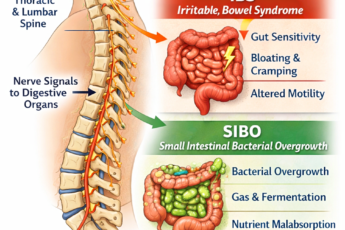
Thiamine Deficiency, SIBO, and Dysautonomia – A Patient-Friendly Guide
Table of Contents
-
- Cause, consequence—or both?
- Hydrogen sulfide, mitochondria, and low energy
- Key takeaway points
- What thiamine does in the body
- The pentose phosphate pathway and gut repair
- Thiamine, the brain, and the nerves that run digestion
- Dysautonomia: when the “autonomic” nervous system is off
- How thiamine deficiency can affect digestion
- Vagal tone and the gut barrier
- Dysbiosis may be a downstream effect
- A modern thiamine problem
- Clinical perspective and conclusion
Cause, consequence—or both?
SIBO stands for small intestinal bacterial overgrowth. It means too many bacteria are growing in the small intestine.
SIBO and gut imbalance can increase the risk of low thiamine (vitamin B1). This can happen when absorption is poor.
Gut bacteria may also matter. Some bacteria can break down thiamine, reducing the amount available to you.
Another factor is hydrogen sulfide (H2S). A related compound, sulfite, can damage thiamine. Higher sulfide levels may also increase the brain’s need for thiamine.
Key idea: Thiamine deficiency can both follow gut problems and worsen them.
Hydrogen sulfide, mitochondria, and low energy
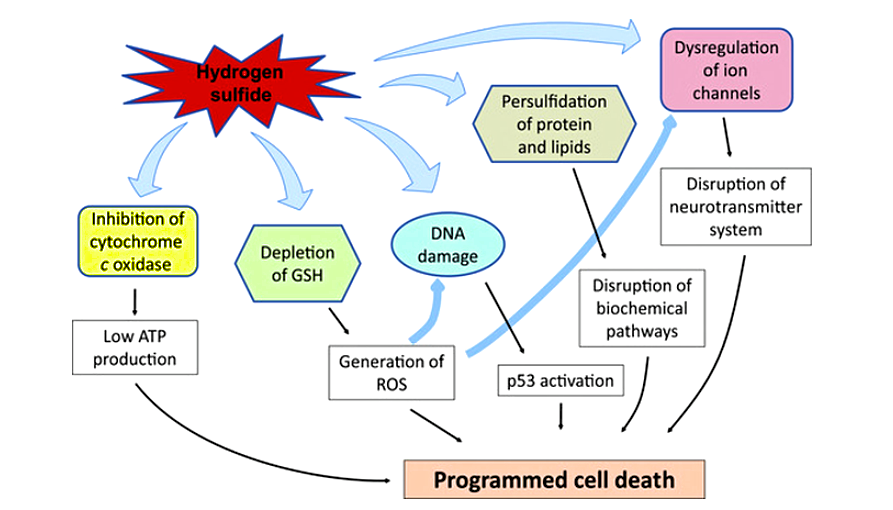
Figure. Hydrogen sulfide (H₂S) is a toxic gas that damages brain cells by blocking mitochondrial energy production, causing a dangerous buildup of calcium inside the cell, and depleting the cell’s primary antioxidant defense (glutathione). This allows harmful reactive oxygen species (ROS)—like destructive sparks—to run wild, damaging DNA, proteins, fats, and ion channels. All these effects worsen each other, ultimately forcing the overwhelmed cell to trigger its own programmed death.
Your cells make energy in parts called mitochondria. They produce ATP, which fuels cell work.
Hydrogen sulfide can interfere with ATP production. It can also affect calcium balance and raise oxidative stress (ROS).
Animal research suggests that coenzyme Q (CoQ) is involved in sulfide metabolism. CoQ10 supplementation has been shown to restore activity of an enzyme involved in sulfide processing (SQR).
Key takeaway points
- Thiamine facilitates the conversion of glucose into usable energy.
- Thiamine supports the pentose phosphate pathway (PPP).
- Low thiamine may shift metabolism toward increased lactate production.
- Thiamine supports nerves and acetylcholine.
- The vagus nerve helps regulate digestion and gastrointestinal motility.
- Low thiamine can impair autonomic function and vagal tone.
- Whole-blood thiamine testing is available through LabCorp (test code 121186).
Definition: Dysautonomia refers to impaired regulation of the autonomic (automatic) nervous system function.
What thiamine does in the body
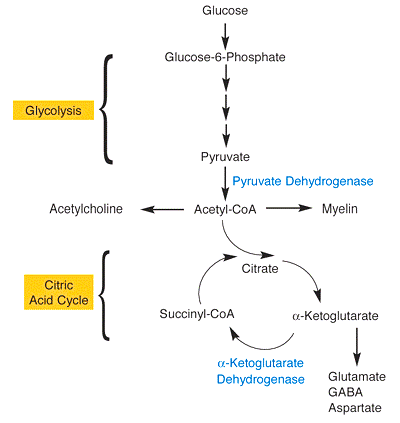
Figure. The Role of Thiamine Deficiency in Alcoholic Brain Disease.
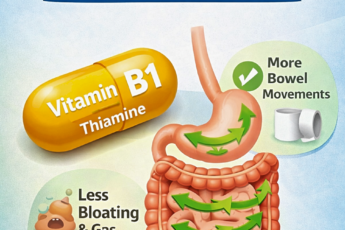
Thiamine is needed for key steps in energy production. When thiamine is low, these steps slow down.
This can shift metabolism toward less efficient pathways. Lactate can rise, leading to a buildup of acid in cells and tissues that harms brain function and worsens fatigue.
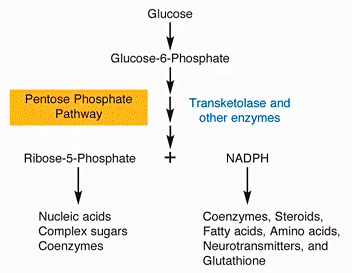
Figure. The Role of Thiamine Deficiency in Alcoholic Brain Disease. (2003). Alcohol Research & Health.
The pentose phosphate pathway (PPP) and gut repair
Some of your glucose enters a side pathway called the pentose phosphate pathway (PPP), where it’s used to produce NADPH—a molecule that powers the body’s antioxidant defenses to protect cells from damage.
The PPP also supports cell building and repair. This is important for the gut lining, which renews rapidly.
Thiamine, the brain, and the nerves that run digestion
The brain consumes a large amount of energy and relies on thiamine to efficiently convert glucose into fuel while also producing essential signaling molecules such as acetylcholine.
Low thiamine can reduce acetylcholine production and disrupt the balance of glutamate, placing stress on nerve signaling—including that of the vagus nerve, which controls digestion.
Thiamine also helps activate vitamin B6; when thiamine is low, this process slows, which can alter how the body handles tryptophan and affect mood-related brain chemicals such as serotonin.
Dysautonomia: when the autonomic nervous system is off
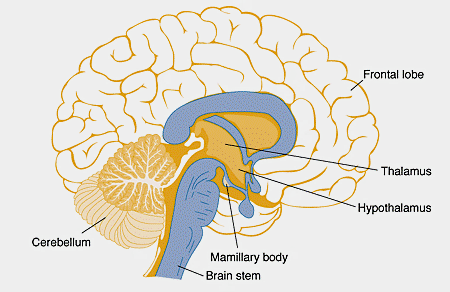
Figure. Brain regions most sensitive to thiamine deficiency.
The autonomic nervous system controls heart rate, blood pressure, sweating, and digestion.
Some autonomic brain regions are energy-hungry. They can be sensitive to low energy metabolism.
Symptoms may include a rapid heart rate, dizziness on standing, and slow gut motility. POTS is one example, and thiamine deficiency has been linked to this pattern.
How thiamine deficiency can affect digestion
The gut has its own nerve network called the enteric nervous system (ENS).
The vagus nerve helps control stomach acid, digestive enzymes, bile flow, and gut movement.
Because thiamine supports acetylcholine, low thiamine can weaken vagal signaling. This can reduce motility and digestive secretions.
Vagal tone and the gut barrier
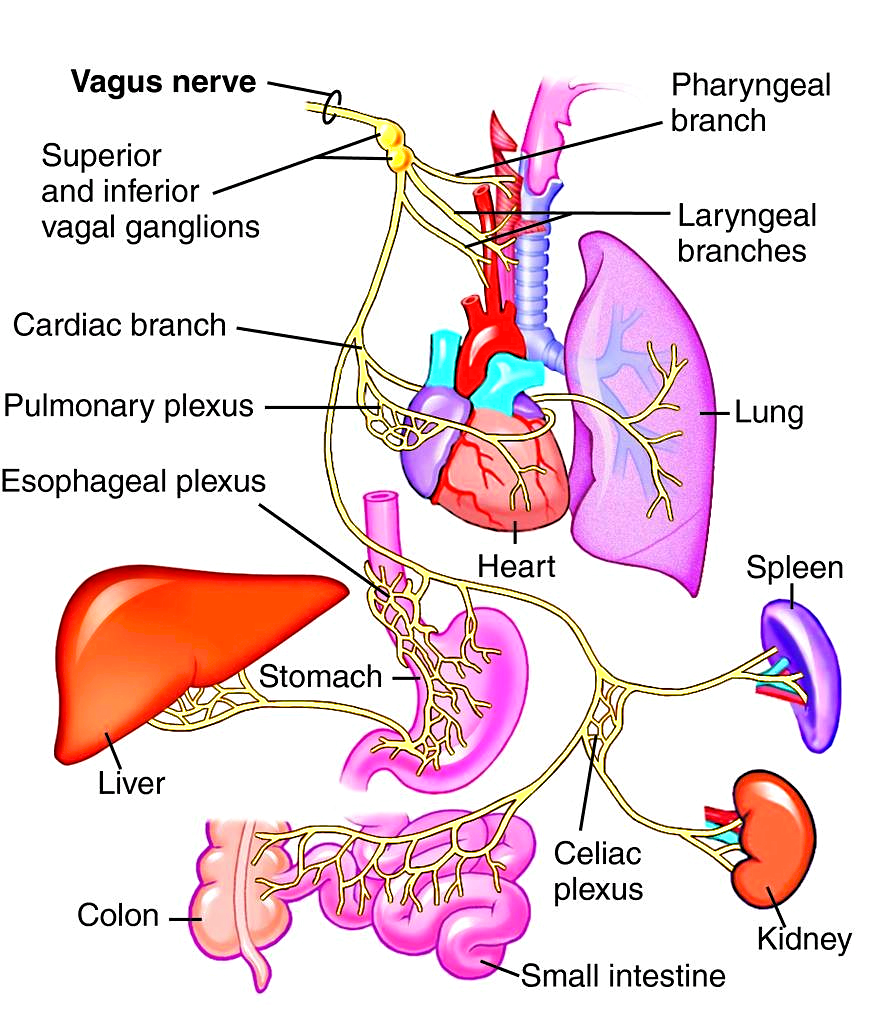
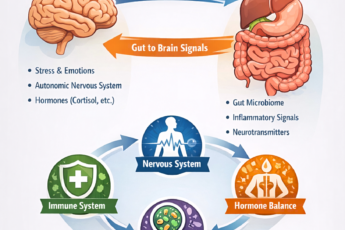
Figure. CNS–vagus–microbiota communication.
The gut barrier is regulated. Vagal tone is one regulator. Vagal signaling supports tight junction proteins, including occludin.
Lower vagal activity is associated with increased permeability and greater inflammation. The vagus nerve also helps regulate inflammation through a cholinergic pathway that can reduce cytokines such as TNF-α.
Dysbiosis may be a downstream effect
Inflammation and higher permeability can change the gut environment. This can favor certain microbes.
In that setting, dysbiosis may be downstream of inflammation and poor regulation.
A modern thiamine problem
Processed diets can be low in vitamins and high in refined carbs. Higher carbohydrate or alcohol intake, as well as stress, can increase thiamine requirements.
Because thiamine is water-soluble, the body needs a steady supply. Over time, low intake and higher demand can reduce thiamine status.
Clinical perspective and conclusion
Many SIBO plans focus on reducing microbial levels. Relapse is common.
This article highlights an upstream lens. In some cases, SIBO symptoms may reflect low energy metabolism and autonomic imbalance. Thiamine status may be part of the picture.
Summary: If SIBO recurs, it may be helpful to examine upstream factors in energy metabolism and autonomic function.
COMPLIMENTARY 15-MINUTE CALL
Take your first step toward a renewed sense of well-being. Call today to arrange a complimentary 15-minute consultation.
Let’s discern whether my approach aligns with your needs.
I look forward to connecting with you at 714-639-4360.