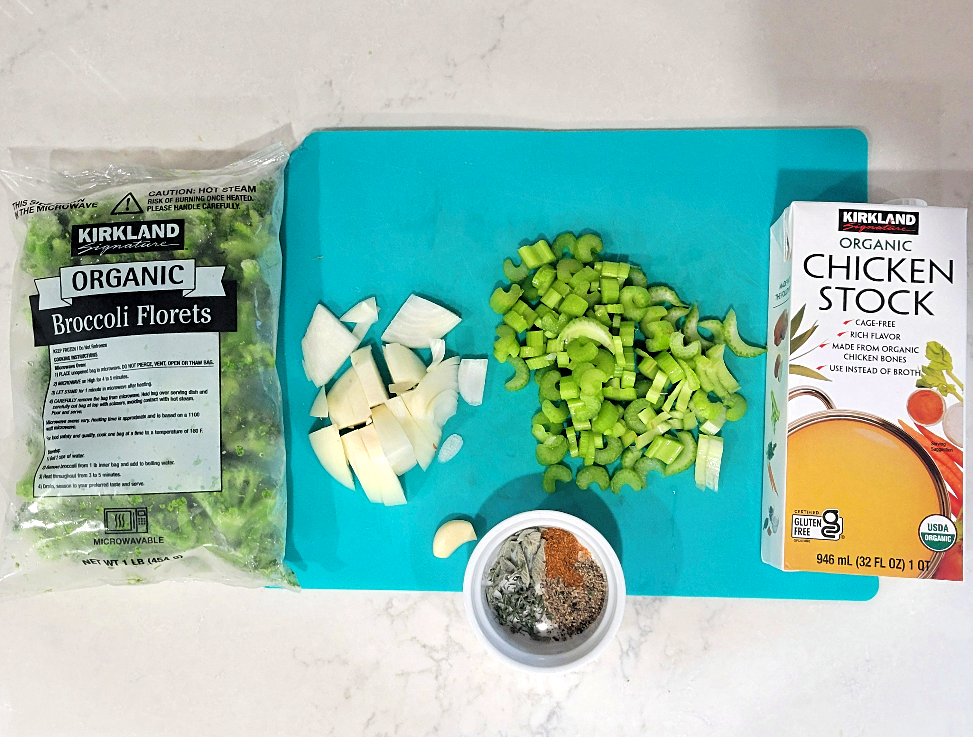
Microbiome Broccoli Soup
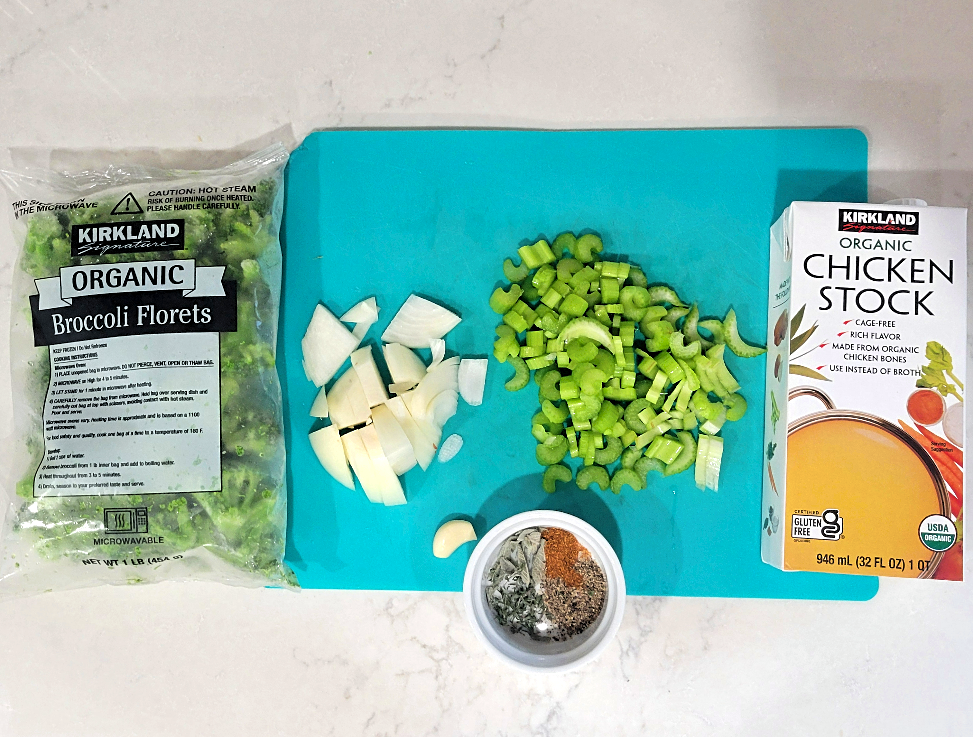
Microbiome Broccoli Soup
- 1 lb bag – Kirkland (Costco) Organic Broccoli Florets
- 1/2 – Yellow Onion
- 3-4 – ribs of Organic Celery
- 1 – 32oz Box of Kirkland (Costco) Organic Chicken or Bone Broth
- 1 -2 cloves garlic (depends on personal preference)
Season to your personal taste. I prefer a rich herb taste and enjoy it when it’s spicy. The more herbs, the better to support the diversity of the microbiome. My sage and thyme are homegrown. The rest is store-bought.
- Sage leaf
- Thyme
- Black pepper
- Cayenne pepper
- Baja Gold Sea Salt (salt to taste when the soup is fully cooked)
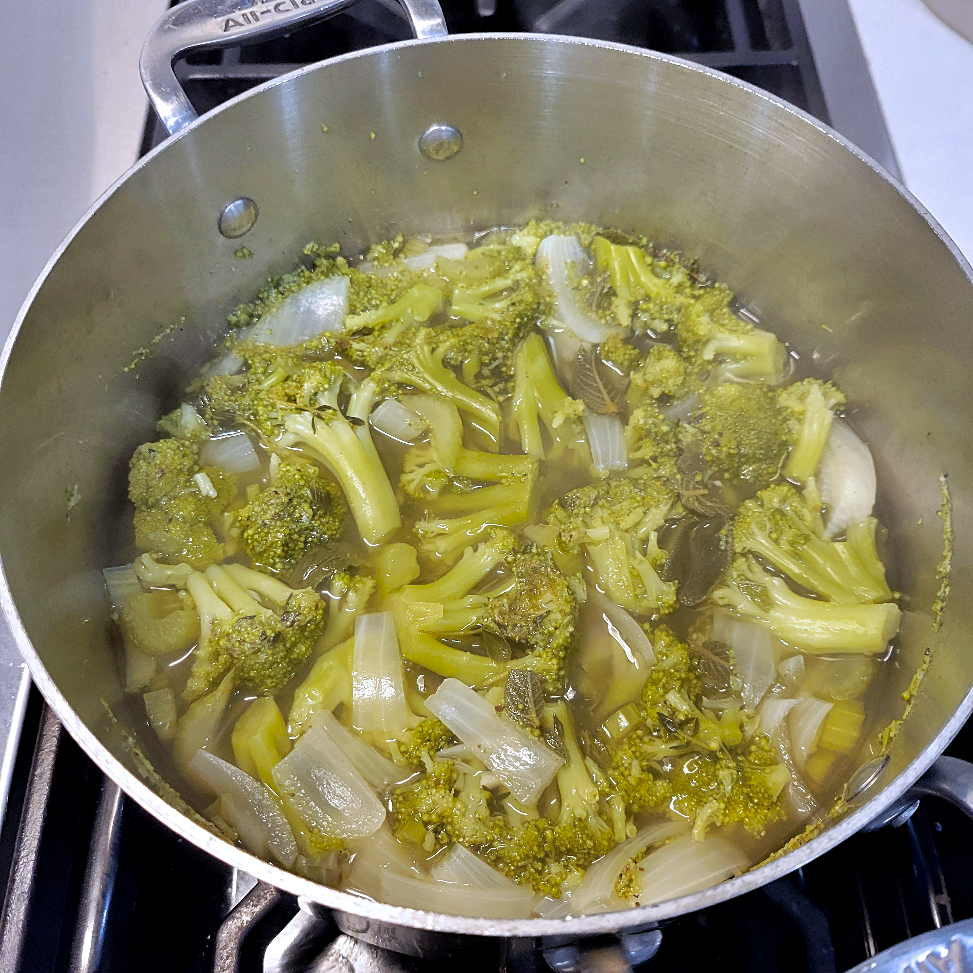
- Cut up the celery and onion into small pieces.
- Place all ingredients into a pot and cook over low heat for about 45 minutes to break down the fiber. Use an immersion blender or pour the soup into a blender and blend until smooth.
- Pour back into the pot and salt and pepper to taste.
- Cook for an additional 15 minutes to allow the flavors to integrate.
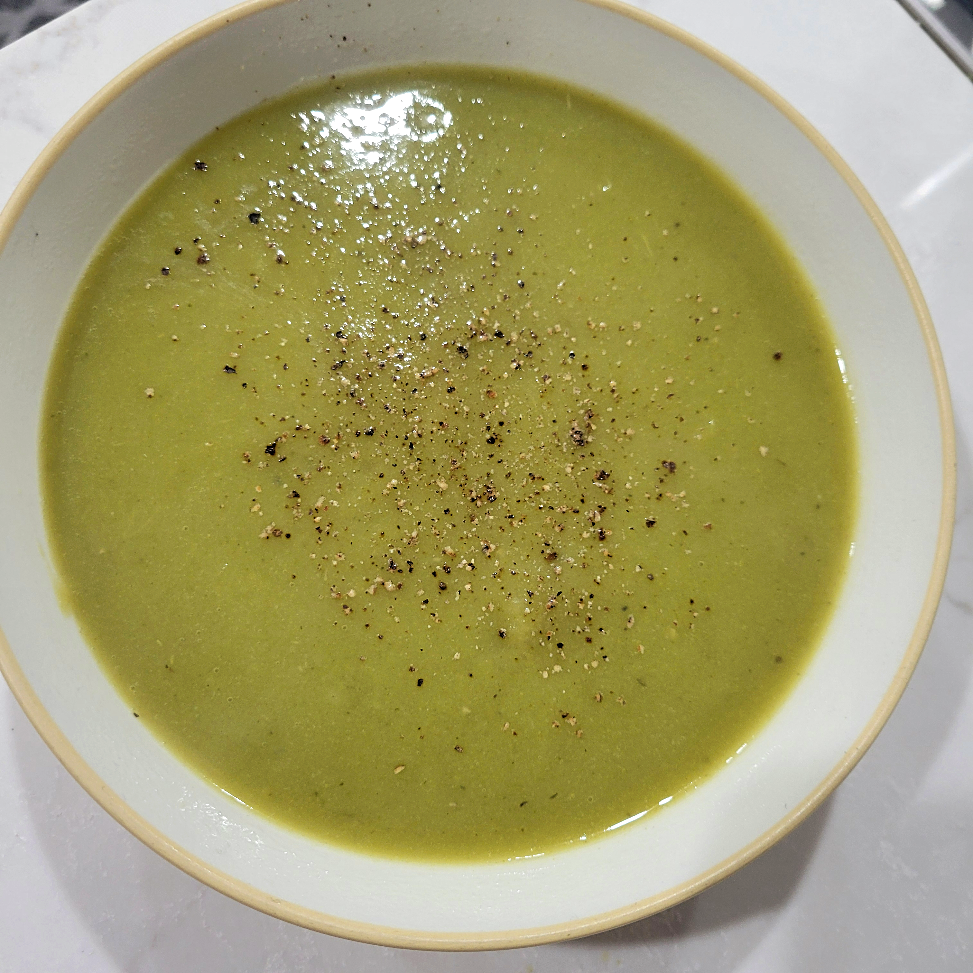
Microbiome Broccoli Soup Practical notes
Cooking method: Gentle simmering preserves many polyphenols and converts fibers into more fermentable forms; avoid over-processing to retain benefits.
Variety: The more herb and veggie variety you add, the broader the microbial niches you feed.
Portion & context: This soup is best as part of a diet with other fiber sources (whole grains, legumes, fruits) for robust microbiome effects.
Bacteria & groups supported/modulated
Below are bacterial genera and selected species that culinary amounts of the ingredients in this soup are commonly associated with supporting, promoting, or modulating.
- Bifidobacterium — fed by inulin, FOS from onions & garlic; associated with immune regulation and SCFA production.
- Lactobacillus — benefits from fermentable oligosaccharides and some polyphenols; helps maintain gut pH and barrier function.
- Faecalibacterium prausnitzii — a major butyrate producer enhanced by fermentable fibers and anti-inflammatory environments (helps reduce gut inflammation).
- Roseburia & other butyrate-producers — supported by pectin and other soluble fibers in broccoli and onions; increase butyrate supply to colonocytes.
- Akkermansia muciniphila — benefits indirectly from improved mucosal health and polyphenols; associated with mucin layer integrity and metabolic health.
- Ruminococcus & Prevotella — groups that break down complex plant polysaccharides and diverse fibers; contribute to cross-feeding networks that produce SCFAs.
- Commensal Clostridia (clusters IV & XIVa) — many members are important butyrate producers and thrive in fiber-rich, low-inflammation conditions.
- Opportunistic/pathogen modulation — culinary garlic, thyme, sage, and capsaicin can help reduce overgrowth of Enterobacteriaceae and some opportunists through mild selective antimicrobial effects (not a reliable “treatment” but supportive for balance).
Read more about broccoli and the microbiome here – Broccoli consumption affects the human gastrointestinal microbiota


